Saturday, January 18, 2014

Market Day: With Recipe!

“Even Socrates, who lived a very frugal and simple life, loved to go to the market."  Jack Kornfield


Today was #market day, as I headed out with my rolling shopping cart, I decided to take my camera with  me to share with you snapshots of my morning in a regular #Roman market.  I am fascinated at how well #Italians eat.  They shop for the day and buy nothing but fresh food (no preservatives, no colorants, #nochemicals!).  No wonder they all live a long life! I am grateful for my time here and I want to learn the good habits of this culture to take them with me wherever my next stop will be.


I've been curiously staring at this super weird broccoli for a year now.  I finally asked, and was told it's called #Broccoli Romanesco. Apparently, it tastes like a mix between regular broccoli and cauliflower.  I had to buy it today, to photograph it and figure out how to cook it. 


As the days have been rainy and cold, I baked some #zucchini bread, perfect for my afternoon coffee break.  This recipe makes two loaves, but the first loaf disappears within seconds in my house, so I am OK with it.  You can always cut the quantities in half for one loaf.

ZUCCHINI BREAD


 3 1/2 cups of flour (I use whole wheat)
1 1/2 teaspoons of salt
1 teaspoon nutmeg
2 teaspoons of baking soda
1 teaspoon of cinammon
2 cups of sugar
1 cup vegetable oil
4 eggs, beaten
1/3 cup of water
2 cups grated zucchini
1 teaspoon of lemon
1 cup chopped walnuts
(you can add raisins or dry cranberries if you wish)

Preheat the oven to 350 degrees Farenheit.  In a bowl combine all dry ingredients.  In another bowl combine all wet ingredients.  Mix the wet into the dry ingredients.  Add nuts and fold them in.  Bake in two buttered and floured #loaf pans.  They are normally done in one hour (or until a toothpick comes out dry).  Enjoy!


   Arrivederci,
 

Tuesday, January 14, 2014

Coffee Break

“I took another slug of my coffee—like most of my old boyfriends, it was strong, dark, Italian and slightly bitter. . .” Rosie Genova, Murder and Marinara


Ah, the smell of #coffee, it's so good I would love to be able to drink it.  Yes, for some strange reason coffee doesn't agree with me.  And what a pity that is, since I would love to walk into a #bar and order "un caffe per favore".  I would also avoid the looks I get when I tell people I don't drink coffee.  How could you not!!  For an Italian it's unthinkable, unimaginable to go through life without coffee.  Actually I've seen 11 year olds drink #decaffeinated versions of #cappuccino for breakfast.  Yep, an Italian citizen in the making.

So what is the deal with coffee?  Here in Italy, coffee is drank for breakfast at the bar, standing, on your way to work or to where ever you go in the morning.  And there are so many types of coffee! Here are some of the most popular ones:

Un Caffé: is an espresso.  Nobody orders an espresso, if you order a coffee is assumed to be an espresso.
Un Caffé Doppio: A double espresso.
Un Caffé Ristretto: A short shot of espresso (less water).
Un Caffé Macchiato: Is an espresso with a splash of milk, normally foamed milk.
Un Capuccino: A third of milk, a third of espresso and a third of foam, ONLY to be drank in the morning, before 10 am preferably.
Una Moka: Coffee made from a macchinetta,  a special pot that works on the stovetop.
Un Marrocchino: Is an espresso with powder chocolate and a splash of milk
Un Americano:  An espresso watered down.
Un Caffé Corretto: An espresso with a shot of liquor normally grappa or zambuca.
Un Caffé Shakerato:  Ice cubes, a Baileys-type liquor and a shot (or two) of espresso.
Un Latte Macchiato: Is milk with a splash of coffee.

Decaff wanna-be's (and my new found best friends):
Any of the above but with the word "decaffeinato" at the end.  All types made with decaff coffee.
Orzo or Ginseng: coffee looking beverages without caffeine.

And don't forget to say "Per Favore" (please) after your order.

Coffee is such a ritual here in Italy that the good coffee bars warm up the porcelain cups so when the coffee is poured into them the temperature of the beverage will remain hot.  If they would pour it into a cold cup it will automatically lower the temperature of the coffee and that is not acceptable.  Some drink it out of a glass because the flavor is supposed remain unchanged by the glass.

Coffee is a very social part of the day.  Most people stop at the same bar (coffee bar) everyday, where the #barista knows them by name.  They also know which bars are the better ones and everyone has a favorite.  Coffee is drank again at mid-morning, after lunch, mid-afternoon and after dinner.

Coffee is drank at 10:00 am at the beach in a hot steamy day.  Because, no #Italian can go about their day without a coffee break.  It's time for mine, arrivederci!


Sunday, January 12, 2014

Italian Food: What to Order While in Rome (with recipe!)

“After arriving on the ancestral soil I figured out pretty quickly why that [Italian] heritage swamps all competition. It's a culture that sweeps you in, sits you down in the kitchen, and feeds you so well you really don't want to leave.” Barbara Kingsolver


Italian food is very regional.  Every region, or better yet, every town has a specialty item or dish that you must try while you are there.  In my quest to learn more about the secrets of Italian food, before I travel anywhere, I research what are the must-have dishes of the place I'm visiting, so I make sure I order their specialties.

My children could not be more different and this fact transpires also in their favorite meals.  While one prefers pasta with tomato sauce (Pasta Pomodoro), the other one loves it with pesto.  Since I cannot make both sauces all the time, I make a batch of pesto sauce and freeze it in ice trays where an ice cube can be easily retrieved every time my youngest wants pasta pesto.

As soon as we set foot in #Rome, my oldest was enjoying his Pasta Pomodoro while my youngest  was flabbergasted to find that Pasta Pesto was never on the menu!  Why? Because basil pesto is a Ligurian specialty and not typical from the #Lazio region where Rome is located.  We had to convince him to be adventurous and try the Roman #specialties.  He eventually found new favorites that normally do not appear in the menus of #Italian #restaurants around the world.

Some of the popular pasta dishes from the Lazio region we've come to love are:

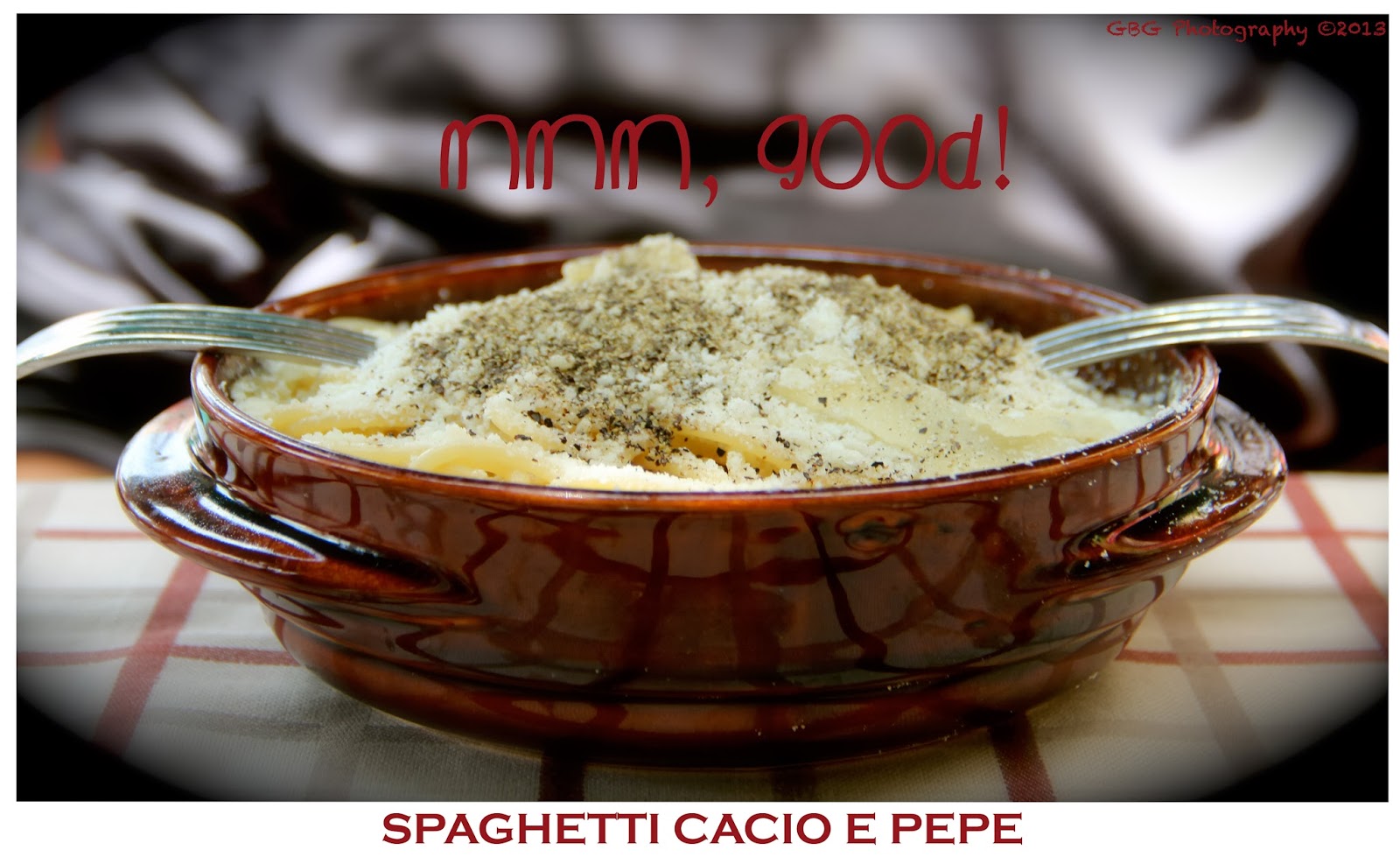
Pasta Cacio e Pepe:  Cacio means cheese and Pepe is pepper.  This dish has to be the original idea from which #MacAndCheese was born.  Every kid loves it and I love it too.  I really appreciate those three-ingredient dishes where if every ingredient is good and fresh, the dish becomes spectacular!  For those fussy eaters, it's a hit!

Pasta Alla #Amatriciana: It's a pasta with tomato sauce and guanciale which is a type of bacon that comes from the cheeks of the pig.  Don't dismiss it yet, try it! It tastes just like bacon.  The sauce is also made with pecorino cheese and white wine.

Pasta alla #Gricia:  A very old recipe invented by the Lazio shepherds with the only few ingredients they had at hand.  It is similar to the amatriciana but without tomatoes. 

Pasta alla #Carbonara: This is the most famous of the four outside of Italy.  It includes percorino cheese, eggs and the guanciale bacon.

RECIPE: SPAGHETTI CACIO E PEPE
1 pound (400 grams) of Spaghetti
160 grams of grated Pecorino Cheese
Pepper to taste

Boil #Spaghetti according to package instructions, additing a little bit of salt to the water (keep it "al dente" which means that you have to be able to bite into it).  Once they are ready drain them keeping some of the pasta water aside and put them back into the empty pot.  Add a couple of laddles full of the pasta water and the pecorino cheese.  Mix well in order to make a creamy sauce with the cheese and the pasta water.  Add freshly ground pepper.  And enjoy!!


Thursday, January 9, 2014

Choosing the Right School for Your Child

“What is a teacher? I'll tell you: it isn't someone who teaches something, but someone who inspires the student to give of her best in order to discover what she already knows.” Paulo Cohelho


Choosing the right school for your child overseas is one of the most important factors when evaluating or even accepting a foreign assignment.  If there is not a suitable school for your child you may even decline the opportunity.

Once you've checked there are a few viable options this important decision becomes one you can manage.  Here is what I do when choosing a school for my children.

If schooling is not part of a salary package the cost is always the first thing to consider as international school can potentially be more expensive that a college tuition.

Then I pay a visit to their websites, check their mission statements and find out which school holds a  curriculum that will give my children a smoother transitions in the academic front.  If your child has already been attending a British or American or Montessori school it will be easier for them to continue with the same style of education to which they are accustomed.

If you know someone already living in what will be your new city, ask for names of people that will be willing to give you references.

International or American schools have always been my first choice, but I know people with longer assigment lenghts that have chosen local or bilingual schools in order for their children to acquire the language skills and fully immerse in the culture.  I have seen children acquire foreign languages in record amounts of time (specially younger kids), and local or bilingual schools may be the better options for those moving permanently or for extended stays.

Through my experience I have learned that most international schools are proficient at communications specially with applicants.  If you couldn't get contacts through others, ask the registrar or admissions officer for the e-mail addresses of people who are willing to answer your questions regarding the school.

Find out the ratio of locals vs. foreign students.  Decide whether is important for you (or even possible) to immerse yourself in the culture or maintain an international perspective.  Know that locals attending International, American or British schools overseas are most likely of well to do families.  These local children may have several people tending to their needs, nannies, drivers, etc and this could be a bit of a cultural shock or in the worse case scenario make for a strong divide between locals and expats. Find out if there is a strong integration policy as part of the school culture.

Are sports a big part of your child's life? Check the school sports facilities and find out how active they are at competitions and even if they offer after-school sports and the cost associated with them.

Younger children adapt easily most of the times, but know that it will take at least six months for your child to feel a true sense of belonging.  For older children it may take longer.  The first year can be hard until they make friends and become more familiar with the new system.

We are all different on what we hold important and every child is a universe but the more time you spend doing your homework before hand the better things will play out later on.

How did you choose the school for your child?  I would love to hear and learn from your experience...

Monday, January 6, 2014

10 Things to Know Before Traveling to Italy

“You may have the universe if I may have Italy” Giuseppe Verdi


Every day there is something new that I learn about #Italian culture that amazes me.  For everything I knew about #Italy before moving here, there are a million things I didn't know and that I wished someone had told me.  Here is a list of my top ten things to know before coming to Italy as a tourist, for a long stay or permanently.

1. I hate hate hate to start with a negative but it is the first thing you need to do after you arrive at the airport.  Watch your belongings, don't leave your purse in the seat next to you while you wait for your bags, don't put your sunglasses at the table in the coffee bar, and be specially vigilant if taking public transportation (train station, subways and buses) and in crowded places.  It will be better once you arrive to walk with a copy of your passport and leave the actual passport in the hotel's safe.  Don't put all your money in your purse, but put some around in ever pocket in case your purse gets snatched.  It happens everyday.

2. Ok, now that we got that out of the way, let's talk about breakfast.  Italian breakfast consist mainly of a shot of #espresso coffee and a crescent shaped pastry called "cornetto".  The cornetto can be plain or filled with jelly, chocolate or cream.  Breakfast is also something you do on the go: stop at the bar, take your shot of coffee, eat your cornetto (all of this standing at the bar) and off you go to continue with your day.  Most hotels offer with their breakfast buffets a bigger selection including cakes and some fruit but you will not commonly find eggs, bacon nor anything savory.  If you go out in the morning and decide to sit at a table in a coffee bar and expect the waiter to come and ask you what you would like to order, you will be paying triple the price!  An espresso costs around 80 cents to 1 euro, 2 euros if you are downtown at a fancier place or if you ask for one after a meal at a restaurant.  The cornetto goes for less than 2 euros, so your breakfast should be less than 5 euro per person.  Oh, and no Italian would ever ask for a capuccino after 10 am.  Why? because it has milk and milk is only for the mornings.  Nobody orders a capuccino after lunch, like people usually do in other places of the world.  Sometimes they won't even serve it to you.

3. Now that your belongings are safe and you had breakfast, let's talk a little bit about lunch.  There is no such thing as "spaghetti with meatballs" there is no pasta Alfredo, there is no pasta with chicken legs on top and despite popular belief, Italians do not eat spaghetti with a fork and spoon.  An Italian meal is divided into five courses.  Antipasto, is your appetizer.  Primo is your pasta dish, mostly without meat, sometimes with seafood.  Your Secondi is your meat dish but it doesn't come with side dishes which are called "contorni".  After your secondi you can order "dolce" which means sweet and is your dessert, and lastly your coffee, of course.  The great thing about eating in Italy is that you are supposed to take your time at the table, enjoy your company, laugh, talk and eat with pleasure.  Nobody will rush you, you can stay for hours at the table.  The waiter won't bring the check until after you've order your coffee.  Take advantage of being here, lower the RPMs and enjoy the Bella Vita!  Of course you can order only a pasta dish and the check, but you can still take your time with that.

Pizza Al Taglio
4.  You may be in the mood for a lighter lunch or not have much time as there is so much in your itinerary that you prefer to get a pizza.  Pizza is another thing Romans do on the go.  Most pizza places offer #Pizza al Taglio (pizza by the slice, which is square).  These places look like a take out spot and consist of a counter with many rectangular pizzas with different toppings.  The person behind the counter will ask which flavor you want and will place scissors in about what consists on one serving, if you want more than that, move your hand signaling a bigger (or smaller) piece, and he or she will then cut your piece, weigh it, warm it up if necessary and give it to you wrapped in a piece of paper or on a paper plate.  When I first came here I would order several squares of different flavors, I wanted to try them all.  Think sun dried tomatoes, artichoke and brie pizza, yummm!!  So remember, Pizza al Taglio (pizza by the cut).  Try different flavors, they are all good!  My favorite neighborhood place is Ippo Pizza which will sell you a meter of margarita pizza for 10 Euro!  My kids love it.

5.  Waiters here receive a salary, they don't work on commission.  There is no need to leave a big tip.  If you had a pasta lunch and wine, a one euro tip is very acceptable.  If you were with a group of friends and had the waiter coming and going, you can leave a bigger tip but not necessarily a percentage of the bill.

6.  Outside of the downtown area, stores close from around 1 to 3:30, and times are not set on stone, if they say they open at 3, the clerk may be showing up at 3:20 and not in a rush, be patient and plan around their closing time.  I don't ever attempt to go to any store until after 4:00 pm. 

7.  It's getting late and you are ready for dinner at 6:30 pm, well.... you won't find restaurants open that early.  The earliest I've seen them open is 7:30 but even then, they may not be ready to serve you yet.   6:30 is really time for the "Aperitivo", basically happy hour.  The restaurants that offer them offer also finger food, so you can last until after 8:00, when it's still early but OK to head to a restaurant for dinner.

8.  There is no parking.  That's it.  If you rented a car leave it in the garage or wherever you parked it and walk.  There is no parking, and locals double and triple park because there is no parking.  If you are the lucky person who found parking, white lines on the street mean it's free parking, blue lines mean that you have to pay for parking using the parking meters, get the ticket and put it in your car, on the windshield so the guards can see it (some cities sell parking cards in the Tobacco stores and you have to scratch the date and hour of your ticket, they look like lotto cards).  Yellow lines mean handicapped.  Again, there is no parking in big cities.

9.  Many Italians own dogs and dogs are taken everywhere: to restaurants, to malls, with them on trips, everywhere.  I saw a dog in a shoe store, shoe shopping I imagine. Nobody picks up after their dog.  Watch your step.

10. Lastly, a word that you need to know because it is something to watch for: "Sciopero".  It means strike.  There are many transportation strikes in all of Italy and they mostly happen on Mondays or Fridays but not necessarily.  As buses and metro are required to run during rush hour they mostly stop during off peak hours which affect the tourist principally.  Check for "scioperi" as soon as you have dates for your trip.  I check #WantedInRome, an English language portal but you can go directly to the Italian transportation authorities if you speak the language.

So there they are and I may post some more in the future.  Arrivederci for now.


Saturday, January 4, 2014

Ringing the New Year Sicilian Style

“And now we welcome the new year, full of things that have never been” Rainer Maria Rilke


Hello and Happy New Year!  I'm back from a few days in #Sicily, making new memories to savor for years to come.  I found so much beauty in so many different levels it will be hard to tell you everything at once, but I will try.

Before we set foot on the island I knew more or less what everybody knows about Sicily: island on the south of Italy with great food and great weather.  Obviously Sicily did not disappoint in those areas.  The capital #Palermo, on the northern coast of the island, is a big and buzzing city where old mixes with new and shabby with chic.  We walked the night-scene of Palermo where I found refreshing how fruit vendors, gourmet restaurants and toothless friends enjoying drinks in a garage coexist as necessary pieces of the puzzle.  The low end places offered cocktails and shots for only a couple euros while a meal at a nice place will go for around 50 euros per person.  I was able to have a date night while in Palermo and I highly recommend restaurant GAGINI (Via Cassari,35 -90133 Palermo).  The food was amazing, the chef was able to redefine some old traditional recipes in sophisticated ways that respect the essence of the original.  Very very good!  If you didn't already know, most restaurants in Italy open for dinner at around 8 pm, so have a snack mid afternoon to be able to enjoy not only the food but also the ambiance.  

From Palermo we traveled by car and set base in #Catania, a charming city on the eastern coast of the island located at the foot of the Etna volcano, which lends its architecture the uniqueness of the lava stone.  There, the main squares (Piazza del Duomo and Piazza Universita) were all decorated for the holidays.  Most Italian cities host concerts for new years and people gather for the countdown at midnight.  Another Italian tradition is to get together with friends for a big meal, in Italian "cenone" that consists mainly of fish and seafood dishes.  If you ever take part on one, be ready to eat and eat and eat some more.  Our new year's eve dinner started at 8:30 and it ended a few minutes before midnight, with just enough time to run outside to see the fireworks and watch the concert at the square.  The one attraction I would have liked to see was the museum of the World War II Landing of Allied Troups in Sicily.

#Siracusa, another important city of Sicily of a completely different feel offers picturesque narrow streets, and wide open spaces near it's cathedral.  It is also the birth place of Archimedes of Syracus, a leading scientist and mathematician of classical antiquity.  An interactive museum dedicated to explore his work is great for children of all ages.

When looking for a restaurant in most of Italy, I try to stay away from the ones in the main squares as they gear towards tourists and may not be the most authentic.  If you feel adventurous, try to walk a couple of blocks from the main streets or squares.  We've found some of the best mom and pop restaurants that way.  I also try to find recommendations on line, but it doesn't hurt to ask the locals (store clerks for example) where do they eat.  In Syracuse we ate at Trattoria Kalliope (Corte degli Avolio 4, Ortigia, Siracusa) and had a great and affordable meal.

#Taormina, a charming city on top of a mountain is one of those places where you have to park a bit far for the center of town.  Then a free shuttle bus is offered to the doorways of the old city.  Oh what a great place to people watch!  As Taormina is located at a higher point, the views of the ocean are spectacular, but I came out with the impression that locals were out only to parade up and down the main street, to see and be seen.  The three photos below were taken in Taormina.

If you are a fan of Italian pottery plan an excursion to Caltagirone.  A Sicilian town know for its production of pottery, terracotta and maiolica.  Most city streets are lined with ceramics stores, my favorite one was owned by Angelo Varsallona who has a facebook page with countless photos of his products (listed as Angelo Vasallona Ceramiche Artistiche).  He also takes orders and ships internationally.

Lastly, another attractive small town, this time on the western part of Sicily, is #Trapani, know for being the city of salt, for its salt pans and old wind mills.  There I found this great restaurant called Ristorante Antichi Sapori, where you can savor all the typical Sicilian dishes and as most #Italian restaurants, they will put together a simple pasta dish for the children even if it's not on the menu (ask for pasta pomodoro which is pasta with a simple tomato sauce or spaghetti aglio olio, which is just pasta with olive oil and garlic, kids always love them).  For the adults however, I recommend you try their couscous with fish broth and fried seafood, it was out of this world!  During our lunch several locals stopped by to get their couscous and fish broth to-go.  You know you found a good restaurant when it's patronized by the locals.

And that is what I was doing for a few days between the old and the new year, recharging my batteries and getting ready for more exciting adventures as Gaby Around the World. 

Friday, December 27, 2013

The Best of...

Here is a present for all my readers.  Below you'll find a list of services that make my life easier while living abroad. 
On top of most Expats' list is staying connected with loved ones back home.**

Vonage
Vonage is a phone service that works over the internet.  Before leaving the U.S. we transferred our U.S. number to Vonage, so we were able to keep the phone number all our friends and family already knew.  The number has been traveling with us to many countries throughout a few continents.  Check Vonage's World Plan, that allows you to call over 60 countries around the world in addition to calls State side.

Skype
Free way to video chat or call home.  The only problem, your contacts have to have the software installed in their computers or cellphones and they have to be online to receive your calls, which can be challenging when you're talking about older folks.  You can also buy Skype credit and call any phone number around the world.  Some friends also use MagicJack.

AppleTV
Not every cable provider has TV shows and movies in English, so we bought an Apple TV which worked wonderfully during our last post in Latin America.  It's great for downloading kids' shows and cartoons in English, at least it makes their life easier when you first arrive and feel immersed in a strange culture.  A few comforts from home won't hurt.  You will need to make an apple id and link your credit card to your account.  Then you just buy or rent movies and tv shows for a few dollars and enjoy american television wherever you are.  Netflix is another option but it doesn't work in every country.

Amazon
Everyone loves Amazon, and it ships internationally

Drugstore
Excellent source for all beauty, toiletries and pharmacy needs.  I have enjoyed their quick service for years.

Snapfish
Snapfish is great for sending Holiday Greeting cards every year.  I have always ordered the cards through them but this year I went a step further and had them deliver the cards directly to my loved ones.  Great service every year!

Podcasts
Apple's itunes has excellent language instruction podcasts.  Once you download itunes into your computer you will be able to access all of the Podcasts.  Whichever language you'll need to deal with, there is a podcast that will teach you in easy 5 minute sessions, words of the day, survival phrases or even advance lessons,,,,for FREE! I've been subscribed to Italianpod101 since I learned I was coming to Rome.  Great video podcast for building vocabulary.

Alright, those were the tips of the day.  Arrivederci!

** image source: www.thebitbag.com

Tuesday, December 24, 2013

Old, New and Borrowed Traditions

"It is useful to study different traditions in order to be free of attachment to any one way of expressing what is beyond expression. (x)” Ravi Ravindra, The Wisdom of Patanjali's Yoga Sutras


During my life as an #expat I have worked hard to keep my family traditions alive, mainly for the sake
of my children.  Many of our traditions are culinary.  When I first got married, my mother in-law gave me a crash course on the dishes dear to her heart in order for her baby, my husband, to continue enjoying the family recipes.  I spent my first #Christmas as a married woman in her kitchen as  she taught me how to make her Anisette cookies.  I just finished making this year's batch, Merry Christmas Irma, I hope you saw the boys struggle making your cookies, you made it look so easy!

During our life overseas, I have celebrated foreign holidays and traditions that now have become my own.  There is no Christmas without a "Pan de Jamon", a Venezuelan Christmas bread stuffed with ham, bacon raisins and olives.  Many times I have also gathered with friends to celebrate Chinese New Year.  One of my expats friends never has her act together in order to mail #Christmas cards, so she always sends Happy Chinese New Year's cards in lieu of the Christmas ones.   Carnavales, celebrated in February in many Southamerican countries, was an easy one to adopt since it always meant traveling to the beach and enjoying the warm weather.

New Tradition: La Befana brings sweets to the children on January 6th.
On our first weekend in Italy we went to Piazza Navona, a buzzling square downtown #Rome that has forever been home of the most important Christmas market in the city.  We were puzzled to see as part of the Christmas decorations sold in the square, a witch, which for us was synonymous of #Halloween.  Come to find out, it was not a witch but the #Befana, an old lady that brings sweets to the children on January 6th and places them in their stockings.  If the children are naughty she brings coal; in the old days she really brought coal, but nowadays she brings coals made out of sugar.  Either way, it didn't take long for my children to demand we adopt the Befana tradition and there I was, buying candy like any other Italian mom, to stuff their stockings on the 6th.

For all the old, new and borrowed traditions, my favorite one will always be Christmas. This year the welcome drink for my guests (as my family is far away) will be a #Peruvian #PiscoSour and believe me, it's much better than a Margarita.  The recipe is as easy as 3, 2, 1.  Here it goes:

Peruvian Pisco Sour:

3 parts of Pisco (peruvian aguardiente)*
2 parts of simple syrup
1 part of lime juice

Mix ingredients in the blender with enough ice to double the volume of the liquid in the blender.
Crush the ice in the blender for a few seconds.  Add one egg white (yeah yeah yeah, organic, free range, bla bla bla) and blend on high for one minute.  This will give it a pretty foam to which you can add a few Angostura Bitters drops. One glass will put you in a very festive mood, enjoy!

*Italian grappa can be used instead of Pisco.

Sunday, December 22, 2013

Merry Christmas Everyone!!

“I am as light as a feather, I am as happy as an angel, I am as merry as a schoolboy. I am as giddy as a drunken man. A merry Christmas to everybody! A happy New Year to all the world! Hallo here! Whoop! Hallo!” Charles Dickens, A Christmas Carol


This post is a short one, just to wish everyone a very Merry Christmas, may the birth of Jesus bring joy to all, but specially to those in need.  Have a wonderful Holiday Season and thank you for reading me!

Warm Regards,

Gaby Around the World

P.S. For for more of my photographs of this wonderful city and more, please visit  http://www.flickr.com/photos/gbg_photography/


Sunday, December 15, 2013

Real Pancakes, Real Food!!

“There is hardship in everything except eating pancakes.” Charles H. Spurgeon


For our first assignment #overseas we were allowed to ship a certain amount of consumables.  This fact alone convinced me we were going to a real hardship post, a place where you could not even find the essentials.  I shipped cereal boxes, #pancake mix, can after can of olive oil, I basically bought half of Costco....

After a few weeks all my edible #consumables were stale, as high humidity was also a characteristic of this place.  This was a blessing in disguise because it steered me away from processed foods and forced me to cook from scratch.  If you wanted pizza without a curry topping, you had to make it yourself.  If you wanted NY #bagels...  My husband gave me a book called "The Best Bagels Are Made at Home", hint hint.

Of course you were able to find eggs, milk, flour, and fruits and vegetables were plentiful in the jungle-like weather of Southeast Asia.  So, I made my own pizza, my own bagels, and of course pancakes from scratch.  I never again worried about shipping consumables, I just consume what is available and enjoy the discovery that comes with going local.

REAL BANANA NUT BUTTERMILK PANCAKES RECIPE

 2 cups of flour
2 1/2 teaspoon baking powder
1/2 teaspoon baking soda
2 tablespoons of sugar
1/2 teaspoon of salt
1 1/2 cups of buttermilk *
2 large eggs
6 tablespoons melted butter **
1/2 teaspoon of vanilla extract
2 bananas cut into small pieces
2/3 cup walnuts

Mix dry ingredients.  Separately, mix wet ingredients.  Wisk dry into wet.  Mix well, let it rest for 15 minutes.  Make #pancakes on a frying pan or griddle.  If you want to keep the pancakes warm, put the platter where you'll serve them in the oven with the temperature on the lowest setting.  Place the pancakes that are ready in the platter and back in the oven until all your pancakes are ready for the table.  Beware, they are delicious!

Breakfast this morning!
 
*I never found buttermilk outside the U.S. so I just substitute with yogurt or milk with a few drops of lemon or lime (after 5 minutes it thickens enough to be used as buttermilk).  Both options are probably healthier.

** If you want to cut back on the butter, substitute it with apple sauce.  Tip learned from a health conscious Mexican friend.

Wednesday, December 11, 2013

Things to Do in Bologna. Recipe: Torta Barozzi style...

“All you need is love. But a little chocolate now and then doesn't hurt.”  Charles M. Schulz


We recently traveled to #Bologna, the capital city of the Emilia-Romagna region.  Back home, we learned about the bountifulness of the region listening to chef Mario Batalli, who highlighted the importance of Emilia-Romagna as a pillar of Italian food.  And why exactly is that?  Because in this region you find the birth places of #BalsamicVinegar, #Parmesan cheese (the King of all cheeses), Spaghetti Bolognese (which in Bologna is called Tagliatelle al Ragu), #Mortadella....

Apparently, all yummy food comes from Emilia-Romagna, and as seekers of yummy food, we took a long weekend to explore and eat our way through food heaven.


Years ago we had taken a tour with Italian Days Food Experience (Ranked #1 in Tripadvisor for activities in Bologna).  If you are a foodie, I highly recommend it.  This time, we contacted Alessandro from Italian Days Food Experience, and he recommended a stay at the B&B "Corte D'Aibo".  This country side B&B is just what we were looking for, peaceful, relaxing but with a five star restaurant and it's own wine production line.  Many of the ingredients used in their kitchen come from their land.  Needless to say, it's a true farm to table experience.


Breakfast there was simple but delicious.  In #Italy, #breakfast consists mostly of a sweet treat and coffee.  They had more than that, but we fell in love with a chocolate/coffee/almond cake that was out of this world.  Yours truly, was able to get the recipe from the kitchen manager.  After researching a bit about the recipe, I learned that it has been around since 1887, and it's been patented, hence the Torta Barozzi STYLE, and not just Torta Barozzi, as I don't have the money to fight a law suit ;).  Here it goes:


Torta Barozzi Style (gluten free!)


100 grams of sugar
100 grams of butter, softened
100 grams of baking dark chocolate, melted
100 grams of toasted ground almonds
1 tablespoon of ground coffee
1 expresso coffee (a shot)
1 egg yolk
2 egg whites, beaten

Melt the chocolate and butter in a double boil.  In a bowl, mix the sugar and the egg yolk until you get a creamy consistency, then add the ground coffee, the shot of expresso and the melted chocolate/butter mixture.  In another bowl, beat the egg whites with a mixer until they form peaks.  Incorporate the other ingredients gently, mixing from bottom to the top.   Add the toasted ground almonds.

Put batter in a rectangular pan lined with wax paper.  Bake for 25 to 30 minutes in a 360º F oven or until a toothpick comes out clean.

I can't wait to try it at home!

Monday, December 9, 2013

The Home Base


“The power of finding beauty in the humblest things makes home happy and life lovely.” Louisa May Alcott


Defining #home is a hard task for me.  I've had so many! Somehow, I've felt home in every single one of my assignments.  If you ask me where home is, right now it's #Rome, where I hand my hat and my heart every night.  But home can also be where my mom is....or where I own a house.

I was OK with my vague and complicated definition of home until my kids started to grow older.  I once asked my three year old where was he from and he responded: "China".  Of course, we were living living in China at the time.  I gave him a second chance to answer my question and he responded he was English.  Not quite the right answer.  I told him, he spoke English but that he was American.  At that point we realized it was probably wise to spend some time back in the U.S., so we moved back for a couple of years, bought a house and set our own home base.

Ever since we established our #homebase, it has been easier to answer to people when asked where home is for us.  Frankly, it's been easier to answer that question to ourselves  A friend of mine who grew up as a TCK (third culture kid) told me she considers herself Spaniard even though she doesn't hold a Spanish passport, because it is there where her parents bough a house to where they would go back year after year, for the summer breaks and holidays.  

Enjoying some baseball during our vacation back home.
I have been going back to my home base in Virginia at least once a year.  We visit with friends, eat at our neighborhood restaurants and shop at our local Whole Foods.  It has grounded us.  We know this #expat life comes with an expiration date, and eventually we will go back home.  It's good to have a home to go back to.

I know #repatriation is not easy (I've been reading about it) but that is material for another whole post.  Until then, Arrivederci!


Friday, December 6, 2013

Get Out to See the Sights

“Taking pictures is savoring life intensely, every hundredth of a second.” Marc Riboud


In my article "The Most Stressful Times", I mentioned that in order to take a break from the stressful part of having moved to a new city (finding a house, hooking up your internet, trying to figure out traffic patterns...) you should take a day off and go see the sights.  Every city has something magical, something that will amaze you.  So get out and let yourself be surprised by your new surroundings.  I did that yesterday and here are some shots of what I encountered...

Sea Nymph, Fountain of Neptune, Piazza Navona, Rome.
Campo De' Fiori, open market in the center of Rome.


If these steps could tell you stories....

National Archives, Rome

And of course food, who can resist to italian food?  Not me!

Wednesday, December 4, 2013

A Recipe Thief - Making Connections Through Food

“The shared meal elevates eating from a mechanical process of fueling the body to a ritual of family and community, from the mere animal biology to an act of culture.” Michael Pollan


Pizza Romana by the Slice, Pizza Al Taglio
I must confess, I didn’t know how to #cook when I got married.  My husband on the other hand is a great cook and his passion for food is contagious.  He’s the grandson of #Italian immigrants and food and cooking are just part of his DNA.

When you are miles away from your country, your own kitchen may be the only source for the food to which you are accustomed.  Trying to find ingredients can prove to be a very challenging task.  Do not become demoralized, try to play with substitutions (you may come up with a great twist on your favorite recipe) and don’t be afraid to ask around, someone in your circle may know where to find what you’re missing.

One of the great aspects of being part of an #International community is learning from each other.  Cooking is a great way to connect with people.   Throughout the years I not only learned how to cook, I also collected recipes from friends around the world.  I put them all in a little binder that I carry with me in my suitcase when I move, for fear of loosing all those pieces of my life.  Almost all my recipes start with a friend’s name: Kelly’s Artichoke Dip, Marilia’s Brazilian Cheese Bread, Kim’s Pita Bread, Martha’s Cuban beans.  Some recipes were happily shared, in order to get others I had to use every persuasive argument I know (I just couldn’t bear the thought of not eating a particular dish once I moved away). And every time I make one of those recipes I think of my friends and the time we spent together in this adventure called Expat living.

Love my international friends for all they have to teach me!
 Do you like to cook?  Why not host a cooking class?  Start small, with only a few friends.  You can even start a cooking club.  The last page of my binder is the recipe for Sushi Rolls (maki), obtained at a #cooking class taught by one of my #Japanese friends, an excellent cook and a great teacher.

Eating with friends is appreciated in all cultures; some traditions are more ritualistic others more relaxed.  Food is also a great way to learn more about your host country. Give it a try!  Or how they say here in Italy: MANGIA, MANGIA!!

Tuesday, December 3, 2013

A Word About the Holidays (specially the ones away from home)


“In the old days, it was not called the Holiday Season; the Christians called it 'Christmas' and went to church; the Jews called it 'Hanukkah' and went to synagogue; the atheists went to parties and drank. People passing each other on the street would say 'Merry Christmas!' or 'Happy Hanukkah!' or (to the atheists) 'Look out for the wall!” Dave Barry


As a family we've made the conscious or maybe not so conscious decision of staying put for the holidays.  So, wherever we called home for a period of time, we just made the Holidays work for us.

Thanksgiving 2013, dinner prepared for last minute guests.  Not bad at all.
I have a big extended family and growing up we always gathered in my home to celebrate Christmas.  My husband too comes from a large family and Holidays were a time to get together and celebrate.  When we got married and moved away from our families the first end of the year approached and we faced the grand dilemma: What should we do for the Holidays this year?  I had bought a fake 5 feet tall tree just in case I wouldn't find anything in the mainly Buddhist country where we had been sent.  I was glad a bought that tree because it was used to celebrate our first Christmas as expats.

That first Christmas we spent it with other singles and childless couples.  After dinner we played Charades and had a good time.  It did feel more like a cocktail party than a Holiday party.  I wasn't really pleased, but that's what happened.

After we had kids maintaining our traditions became more important.  We bought a better tree and started getting together with other families with children.  Christmas became more of what I remember growing up.  The difference was that we didn't have blood ties, we were an expat family.

Once you move away from home, you will meet others that are in the same situation.  They will relate to what you are going through.  Very strong friendships are formed and spending the Holidays with your Expat Extended Family can be a wonderful thing.  If you add to that the avoidance of having to deal with the family issues all families have, it can be a very attractive option.  If there's nothing planned, invite people to your home. They are going to be so glad to be invited they won't care if the plates don't match.  Believe me, the holiday cheer will spread.

Our not so perfect 2012 Xmas tree.
If you are moving just before the holidays, make sure you pack in your suitcase the items that will make your new place more holiday-ready.  I went to Target and bought some foam holiday signs (yes, you always have to watch the weight of your suitcases).  I also packed scissors, scotch tape and wrapping paper.  I shipped holiday candy and presents for my children ahead of time.

There's been times when we've had Chinese food for Thanksgiving, but as long as there was pumpkin pie, we were thankful for being healthy, having a loving family and for experiencing life overseas.  Have a wonderful Holiday Season!  Peace Out.

Have you spent a holiday away from home?  Do you have any tips on how to make them better for your kids?