Showing posts with label Photography. Show all posts

Thursday, April 16, 2015

Garden Inspirations from a Roman Emperor

"If you have a garden and a library, you have everything you need" Marcus Tullius Cicero


Spring is finally here in Rome and if there is anything synonymous with spring, it is a garden. Today I visited two wonderful places located forty minutes outside of Rome, in a town called Tivoli: The Villa D'Este and Hadrian's Villa.  Villa D'Este has the most wonderful gardens you can imagine, and I would post hundreds of pictures if I could.

If you are planning to revamp your garden, why not take some inspiration from these UNESCO world heritage sites?  I'm not an empress and certainly I'm no gardener (I have the brownest thumb anyone can have), but I've found much needed inspiration in the gardens of Villa D'Este and Hadrian's Villa to try to apply to the garden of my humble home. 

Here are some pointers of what I saw today:

1. Consider adding rhythm to your garden: Find something you like and repeat, repeat and repeat. 


2. Add a fruit tree to your garden, they are beautiful and yummy at the same time.  Plus the reward of knowing where your food comes from is priceless!


3. A water feature will make you feel like an empress/emperor


4. Flowers flowers everywhere.  We are all used to flower beds, have you considered having flowers above your head?

5. Multi-Function Shrubs: Rosemary is resilient, edible and has beautiful blooms, if Emperor Hadrian used it so can you.


I hope you enjoyed today's post, if you have any other gardening advise please leave it in the comments section, I need all the help and motivation I can get.

Arrivederci for now,

Sunday, December 14, 2014

Il Ginanicolo, One of the Best Views of Rome

"She taught me to slow down.  To look up and enjoy the view.  To not worry so much about the end result that I end up missing things along the way.” Lisa Schroeder, Chasing Brooklyn


You may already know that ancient Rome was a city with seven hills, each one with distinct importance and enough history to fill volumes of books.  In present day Rome, there is a hill called the Gianicolo that has lots of interesting attractions and that seldom gets included in pre-planned city tours.  If you have a little extra time in Rome and are looking for a great view of the city, head to the Gianicolo hill and you will find the following:


One of my favorite views of the Rome.    I don't have to say much, just look at the image above and judge for yourself.

A canon that shoots at noon everyday!  Kids (maybe not those afraid of loud noises) will love the thrill of listening to a real canon shoot at noon, everyday, rain or shine.  It is said that the shooting of the canon was started by Pope Pio IX in 1847 to synchronize the sounding of the bells in all the churches of Rome.  The canon has been on the Gianicolo hill since 1904.


Monument to Garibaldi.  An equestrian statue of Giuseppe Garibaldi overlooking the Gianicolo hill.  

The Fontanone.  Officially called the Fountain of Acqua Paola it debuted in the latest Italian film to win an Academy Award to the Best Foreign Language Film, the Great Beauty

The Gianicolo hill is located near Saint Peter's and Trastevere, if you are in the area, don't hesitate to visit this great part of town.  If you are an avid photographer, the stop at the Gianicolo is a must!  If you want to read about another place from where to take great pictures of Rome, click here.


Arrivederci,


Saturday, November 8, 2014

Rome on a Budget: Amazing Statues

“If you ask me what I came to do in this world, I, an artist, will answer you: I am here to live out loud.”  Emile Zola


People visit Rome for many, many reasons, the food, the architecture, the magic, and of course the art.  But what if you are a big art aficionado who wants to keep the traveling budget under control?  Well, there are several ways to enjoy art around Rome and most of them are free.

Art is everywhere in Rome, in its fountains, piazzas (city squares), religious statues; all you have to do is walk around and you'll bump into art; basically, you can't avoid it even if you tried.  Here are a few of the most notorious sculptures and some of my personal favorites:

#1 La Pietà by Michelangelo
Of course, coming at number one is Michelangelo's La Pietà.  This master piece is housed in St. Peter's Basilica, as soon as you come in it will be on your right hand side.  This statue of the Virgin Mary holding the body of Jesus after crucifixion is simply spectacular.  There is no entrance fee to St. Peters, but you do have to make long lines to enter St. Peter's square and the basilica, so plan to go there early, especially during the summer months.  

#2 Moses by Michelangelo
The statue of Moses is another master piece by Michelangelo Buonarroti.  It is housed in the Basilica of St. Peter in Chains (San Pietro in Vincoli), which is an easy walk from the Colosseum.  If you are planning a tour to the Colosseum, don't forget to detour a little bit to marvel at this amazing statue.  No entrance fee.  Closest metro stop: Cavour

#3 Triton's Fountain by Bernini


The "Fontana del Tritone" sculpted by Gian Lorenzo Bernini is located in the middle of the Barberini square (and steps from the Barberini metro stop).  It is one of my personal favorites, especially during the Christmas season as the building behind it gets illuminated with Christmas lights, creating an amazing background for photographs.  Since you are already there, take a look at the Bee's fountain by the same sculptor, which sits right outside the metro exit.

#4 The Ecstasy of Saint Theresa by Bernini
Art students and art lovers can't miss this Bernini's masterpiece.  The statue of the Ecstasy of Saint Theresa is located in the church of Santa Maria della Vittoria (very close to Piazza della Repubblica).  This magnificent statue represents an episode described by the saint herself where an angel with a fire-tipped spear pierces her heart sparking a religious ecstasy.  A must see!  The church is closed during lunch hours (reopening at 3:3o pm) and if you go later in the day you have to make an offering for the statue to be illuminated.


#5 The Fountain of the Four Rivers by Bernini
This fountain is located in the middle of Piazza Navona and its vast size is enough to astonish you!  There are four marble giants, the River Gods, representing the four main rivers of the world: the Nile in Africa the Ganges in Asia, the Danube in Europe and the Rio de la Plata in America.

There are many sculptures by not so renown artists that are just as amazing.  Like the Fountain of the Turtles in the Jewish Ghetto; in reality this list could be never ending, but I will end it here.  Hope you get a chance to marvel at these amazing statues!

Arrivederci for now,


Thursday, June 19, 2014

Things to Do While in Rome: Trastevere

“Happiness, not in another place but this place...not for another hour, but this hour.”  Walt Whitman


Looking for a fun place in Rome to dine "al fresco" or just hang with your friends in a piazza? You'll have to look beyond the Tiber river and into Trastevere. 


Trastevere is a neighborhood in Rome, south of the Vatican.  It is a 20 minute walk from the Vatican, so if you go to Saint Peter's Basilica early in the morning, you can make you way to Trastevere for lunch.  Just follow the river until you reach the bridge called Ponte Sisto, and Trastevere will be on your right.

This neighborhood has a unique personality. Narrow cobble-stone streets, restaurants and bars all around, clothing lines hanging from the windows, it has it all.  I even appreciate the graffiti on the doors, despite their transgressive nature, they're part of this neighborhood's laid back and fun atmosphere. Trastevere feels vibrant at any hour of the day, but specially at night.  There are a few foreign universities nearby so it always attracts a young crowd.

Whether you want to savor a good gelato on a hot day, have a dish of pasta at reasonable prices or enjoy a few beers at night, you can make Trastevere your destination.  A couple of good gelaterias are "I Dolci Di Checco" at Via Benedetta 7 and "Gelateria del Viale" at  Piazza Giuseppe Gioacchino Belli 9F.


Street performers, specially on weekends, come out to entertain the crowds.  So, wear comfortable shoes and go take a walk around Trastevere.  You may just find your favorite spot in Rome.

Arrivederci,

Monday, June 9, 2014

Nemi: The Town of the Wild Strawberries

“But don't forget, in the meantime, that this is the season for strawberries. Yes.”  Clarice Lispector


Last weekend I was looking for a destination near #Rome and my #Italian friends recommended I visit #Nemi, the town of wild strawberries or "fragoline".  I was so lucky my visit coincided with the town's annual strawberry festival.  Every town in Italy has some kind of special day for their culinary specialty, called "Sagra" so you have the Sagra of the Truffles, Sagra of the Ricotta, Sagra of the Roses, you name the food item, there is a Sagra somewhere for it.  If I could, I would go to all of them!

Nemi is a small town overlooking a lake of the same name, a volcanic lake located 40 minutes south of Rome.  The lake is small compared to others in the region but was favored by Emperor Caligula who built two luxurious vessels that after his death were sunk into the bottom of the lake.  For three euro you can visit the Museum of Roman Ships opened daily from 9am to 6pm except on Sundays when it closes at 2 pm.

But what brought me there were the wild #strawberries!  Small in size but full of flavor.  Of course I had to try the wild strawberry tart, the crepes with wild strawberry toping, the strawberry liquor....

Next time I will go on a hike in the forrest near the lake, and that will be my reason to go back to Nemi.

Arrivederci,


Friday, April 18, 2014

Happy Easter!!

“When Good Friday comes, these are the moments in life when we feel there's no hope. But then, Easter comes.”  Coretta Scott King


This shot was taken in Taormina, a hilltop town in Sicily.  In its cathedral, this carving serves as the base of the altar.  I love finding the not so famous art all around this country.  (Read more about Sicily here)


 Happy Easter to all!


Sunday, April 13, 2014

A Day in Florence: Where to Go, What to Eat


"...how much intelligence Man once imposed upon the forms of the earth, when he set up the stones of Florence in the billowing expanse of the Tuscan olive-groves." Andre Malraux


Florence, the capital of the Tuscan region, is one of the most visited cities in Europe.  It is synonymous with works of art and good wine, and has inspired artists for centuries.  If you are a Renaissance enthusiast or just want to walk the streets of Michelangelo and Botticelli, Florence (in Italian: Firenze) will captivate you in no time!


Of course with more than one million works of Renaissance art housed in over 70 museums and countless churches, you will have to pick and choose what you want to see.  Depending on the time of the year, the museums can get very crowded so it's better to book your visit ahead of time.  Click here for the official reservations page.  Please note that state-run museums close on Mondays.  The famous David statue by Michelangelo is housed in the Galleria dell'Accademia museum, even though replicas of the David can be found all around town if you want to see the original you need to plan ahead and make a reservation.  The famous painting by Botticelli "The Birth of Venus" is housed in the Uffizi GalleryBooking your tickets in advance will help during high tourist season.

There is so much to see in Florence it's hard to narrow down the list of places to visit, however the following are landmarks of the city you cannot miss:

Il Duomo: Located in the heart of Florence, its colors differentiate it from other cathedrals in Italy.


Piazza della Signoria: The main square of Florence where you will find a replica of Michelangelo's David as well as Palazzo Vecchio, Florence's town hall.  You will also find the Loggia dei Lanzi a building with an open facade composed of arches that was originally design to hold public meetings.   The arches give the traveler a perfect shaded place to pause and view the statues with which it's adorned.  My children engaged in their own art/history discussion while contemplating the statue of Perseus holding Medusa's head.  The open spaces of the Piazza della Signoria make it a perfect spot to regroup while taking it all in.


Ponte Vecchio:  Crossing the Arno river, Ponte Vecchio (Old Bridge), is a symbol of the city.  The sidewalks of this pedestrian only bridge are occupied by jewelry stores and souvenir shops.  On the other side of the river you'll find good neighborhood restaurants with reasonable prices.  


Of course while in Florence don't pass the opportunity to try their most famous dish Bistecca alla Fiorentina (Steak, Florence-style).  My husband, a recurrent patron, recommends Perseus at Viale Don Minzoni 10.  It's a 20 minute walk from the historic center, but after eating a monster steak the walk is always welcomed.

Arrivederci,


Friday, February 7, 2014

Things to Do While in Rome: The Jewish Ghetto

 "Learn from history or you're doomed to repeat it"  Jesse Ventura


If you are coming to #Rome with a little more time than just to tour the Colosseum and the Fontana di Trevi, I highly recommend a stop at the Jewish Ghetto.  When I came here as a tourist, I have to confess that I skipped it, but yesterday I took advantage of the beautiful day in Rome and headed out to see this part of the city that had escaped me for some reason.


The Portico d'Ottavia, at the heart of the #JewishGhetto, is an amazing structure from the year 27 BC. From the Portico to the blocks leading to the #TurtleFountain you will find one of the oldest Jewish communities in Europe.

The Jewish Ghetto was established on 1,555 in an undesirable part of town, prone to flooding.  Over 2,000 #Roman #Jews where ordered to live there in the most crushing poverty as they were only allowed to work unskilled jobs.  The three gates to the #Ghetto were locked at night.

It was amazing to walk through these cobblestone streets, witness to such horrors.  As when in October 16, 1943, trucks pulled next to the Portico di Ottavia and waited idle while German soldiers at gun point herded Roman Jews to the trucks and transported them to #Auschwitz.  Only 16 survived.  A plaque on one of the buildings reads: "On October 16, 1943, here began the merciless rout of the Jews. The few who escaped murder and many others, in solidarity, pray for love and peace from mankind and pardon and hope from God."


Details of the beautiful Roman Synagogue
Capture of the reflection of the Synagogue on a puddle of rain.
Today the Jewish Ghetto is visited by well-heeled Romans.  Its restaurants are very chic and they proudly display their specialty: #Artichokes Giudia Style.  I tried my first one yesterday at Hostaria Giggetto (Via del Portico d'Ottavia 21/A) and I have to say it was delicious!! (They also serve a spaghetti alla carbonara that is to die for!)

My very first Artichoke alla Giudia!!!

It was well worth the visit, and I can't wait to go there again!  For many more photographs of my visit to the ghetto visit my Facebook page.


Saturday, January 18, 2014

Market Day: With Recipe!

“Even Socrates, who lived a very frugal and simple life, loved to go to the market."  Jack Kornfield


Today was #market day, as I headed out with my rolling shopping cart, I decided to take my camera with  me to share with you snapshots of my morning in a regular #Roman market.  I am fascinated at how well #Italians eat.  They shop for the day and buy nothing but fresh food (no preservatives, no colorants, #nochemicals!).  No wonder they all live a long life! I am grateful for my time here and I want to learn the good habits of this culture to take them with me wherever my next stop will be.


I've been curiously staring at this super weird broccoli for a year now.  I finally asked, and was told it's called #Broccoli Romanesco. Apparently, it tastes like a mix between regular broccoli and cauliflower.  I had to buy it today, to photograph it and figure out how to cook it. 


As the days have been rainy and cold, I baked some #zucchini bread, perfect for my afternoon coffee break.  This recipe makes two loaves, but the first loaf disappears within seconds in my house, so I am OK with it.  You can always cut the quantities in half for one loaf.

ZUCCHINI BREAD


 3 1/2 cups of flour (I use whole wheat)
1 1/2 teaspoons of salt
1 teaspoon nutmeg
2 teaspoons of baking soda
1 teaspoon of cinammon
2 cups of sugar
1 cup vegetable oil
4 eggs, beaten
1/3 cup of water
2 cups grated zucchini
1 teaspoon of lemon
1 cup chopped walnuts
(you can add raisins or dry cranberries if you wish)

Preheat the oven to 350 degrees Farenheit.  In a bowl combine all dry ingredients.  In another bowl combine all wet ingredients.  Mix the wet into the dry ingredients.  Add nuts and fold them in.  Bake in two buttered and floured #loaf pans.  They are normally done in one hour (or until a toothpick comes out dry).  Enjoy!


   Arrivederci,
 

Tuesday, January 14, 2014

Coffee Break

“I took another slug of my coffee—like most of my old boyfriends, it was strong, dark, Italian and slightly bitter. . .” Rosie Genova, Murder and Marinara


Ah, the smell of #coffee, it's so good I would love to be able to drink it.  Yes, for some strange reason coffee doesn't agree with me.  And what a pity that is, since I would love to walk into a #bar and order "un caffe per favore".  I would also avoid the looks I get when I tell people I don't drink coffee.  How could you not!!  For an Italian it's unthinkable, unimaginable to go through life without coffee.  Actually I've seen 11 year olds drink #decaffeinated versions of #cappuccino for breakfast.  Yep, an Italian citizen in the making.

So what is the deal with coffee?  Here in Italy, coffee is drank for breakfast at the bar, standing, on your way to work or to where ever you go in the morning.  And there are so many types of coffee! Here are some of the most popular ones:

Un Caffé: is an espresso.  Nobody orders an espresso, if you order a coffee is assumed to be an espresso.
Un Caffé Doppio: A double espresso.
Un Caffé Ristretto: A short shot of espresso (less water).
Un Caffé Macchiato: Is an espresso with a splash of milk, normally foamed milk.
Un Capuccino: A third of milk, a third of espresso and a third of foam, ONLY to be drank in the morning, before 10 am preferably.
Una Moka: Coffee made from a macchinetta,  a special pot that works on the stovetop.
Un Marrocchino: Is an espresso with powder chocolate and a splash of milk
Un Americano:  An espresso watered down.
Un Caffé Corretto: An espresso with a shot of liquor normally grappa or zambuca.
Un Caffé Shakerato:  Ice cubes, a Baileys-type liquor and a shot (or two) of espresso.
Un Latte Macchiato: Is milk with a splash of coffee.

Decaff wanna-be's (and my new found best friends):
Any of the above but with the word "decaffeinato" at the end.  All types made with decaff coffee.
Orzo or Ginseng: coffee looking beverages without caffeine.

And don't forget to say "Per Favore" (please) after your order.

Coffee is such a ritual here in Italy that the good coffee bars warm up the porcelain cups so when the coffee is poured into them the temperature of the beverage will remain hot.  If they would pour it into a cold cup it will automatically lower the temperature of the coffee and that is not acceptable.  Some drink it out of a glass because the flavor is supposed remain unchanged by the glass.

Coffee is a very social part of the day.  Most people stop at the same bar (coffee bar) everyday, where the #barista knows them by name.  They also know which bars are the better ones and everyone has a favorite.  Coffee is drank again at mid-morning, after lunch, mid-afternoon and after dinner.

Coffee is drank at 10:00 am at the beach in a hot steamy day.  Because, no #Italian can go about their day without a coffee break.  It's time for mine, arrivederci!


Sunday, January 12, 2014

Italian Food: What to Order While in Rome (with recipe!)

“After arriving on the ancestral soil I figured out pretty quickly why that [Italian] heritage swamps all competition. It's a culture that sweeps you in, sits you down in the kitchen, and feeds you so well you really don't want to leave.” Barbara Kingsolver


Italian food is very regional.  Every region, or better yet, every town has a specialty item or dish that you must try while you are there.  In my quest to learn more about the secrets of Italian food, before I travel anywhere, I research what are the must-have dishes of the place I'm visiting, so I make sure I order their specialties.

My children could not be more different and this fact transpires also in their favorite meals.  While one prefers pasta with tomato sauce (Pasta Pomodoro), the other one loves it with pesto.  Since I cannot make both sauces all the time, I make a batch of pesto sauce and freeze it in ice trays where an ice cube can be easily retrieved every time my youngest wants pasta pesto.

As soon as we set foot in #Rome, my oldest was enjoying his Pasta Pomodoro while my youngest  was flabbergasted to find that Pasta Pesto was never on the menu!  Why? Because basil pesto is a Ligurian specialty and not typical from the #Lazio region where Rome is located.  We had to convince him to be adventurous and try the Roman #specialties.  He eventually found new favorites that normally do not appear in the menus of #Italian #restaurants around the world.

Some of the popular pasta dishes from the Lazio region we've come to love are:

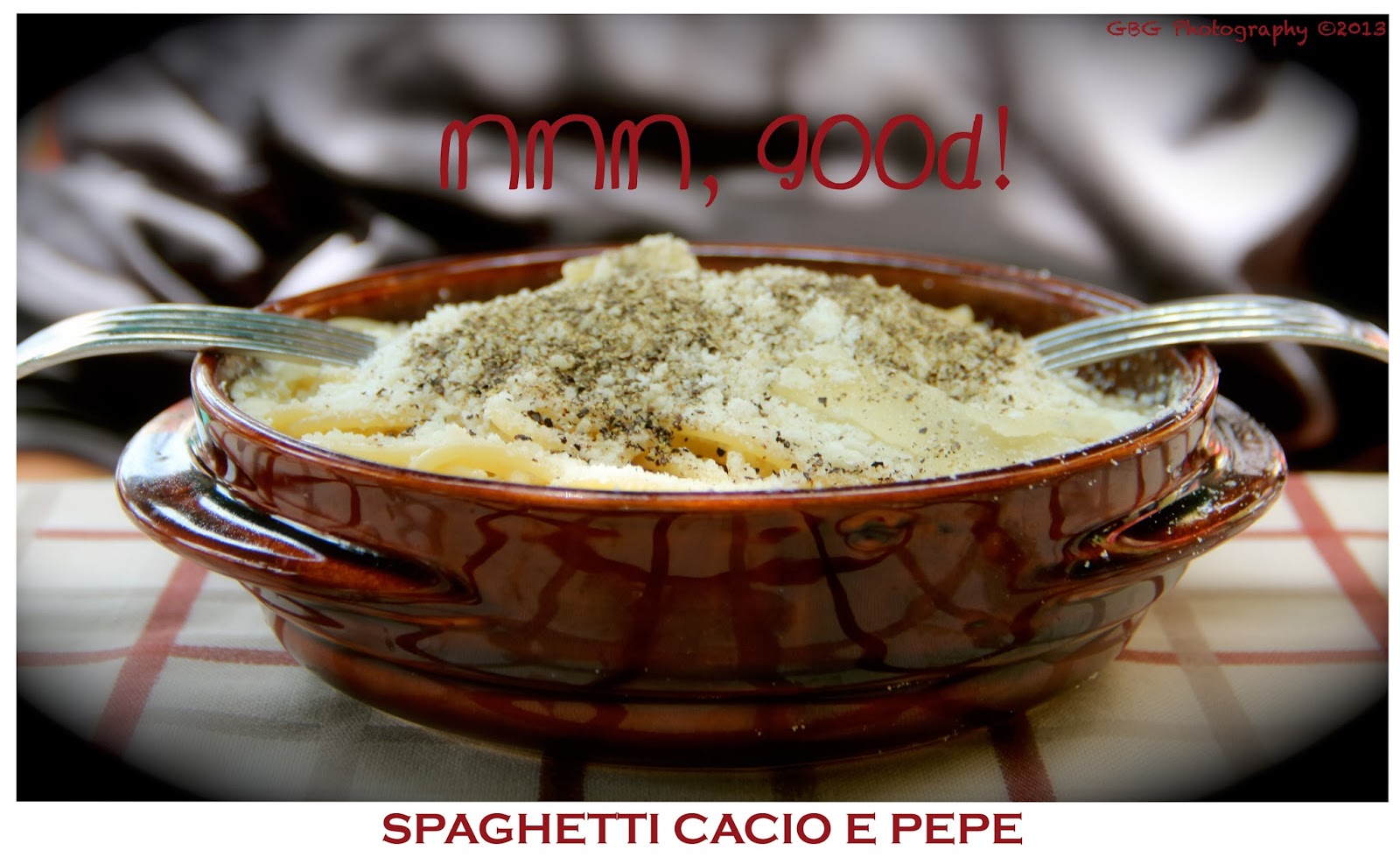
Pasta Cacio e Pepe:  Cacio means cheese and Pepe is pepper.  This dish has to be the original idea from which #MacAndCheese was born.  Every kid loves it and I love it too.  I really appreciate those three-ingredient dishes where if every ingredient is good and fresh, the dish becomes spectacular!  For those fussy eaters, it's a hit!

Pasta Alla #Amatriciana: It's a pasta with tomato sauce and guanciale which is a type of bacon that comes from the cheeks of the pig.  Don't dismiss it yet, try it! It tastes just like bacon.  The sauce is also made with pecorino cheese and white wine.

Pasta alla #Gricia:  A very old recipe invented by the Lazio shepherds with the only few ingredients they had at hand.  It is similar to the amatriciana but without tomatoes. 

Pasta alla #Carbonara: This is the most famous of the four outside of Italy.  It includes percorino cheese, eggs and the guanciale bacon.

RECIPE: SPAGHETTI CACIO E PEPE
1 pound (400 grams) of Spaghetti
160 grams of grated Pecorino Cheese
Pepper to taste

Boil #Spaghetti according to package instructions, additing a little bit of salt to the water (keep it "al dente" which means that you have to be able to bite into it).  Once they are ready drain them keeping some of the pasta water aside and put them back into the empty pot.  Add a couple of laddles full of the pasta water and the pecorino cheese.  Mix well in order to make a creamy sauce with the cheese and the pasta water.  Add freshly ground pepper.  And enjoy!!


Monday, January 6, 2014

10 Things to Know Before Traveling to Italy

“You may have the universe if I may have Italy” Giuseppe Verdi


Every day there is something new that I learn about #Italian culture that amazes me.  For everything I knew about #Italy before moving here, there are a million things I didn't know and that I wished someone had told me.  Here is a list of my top ten things to know before coming to Italy as a tourist, for a long stay or permanently.

1. I hate hate hate to start with a negative but it is the first thing you need to do after you arrive at the airport.  Watch your belongings, don't leave your purse in the seat next to you while you wait for your bags, don't put your sunglasses at the table in the coffee bar, and be specially vigilant if taking public transportation (train station, subways and buses) and in crowded places.  It will be better once you arrive to walk with a copy of your passport and leave the actual passport in the hotel's safe.  Don't put all your money in your purse, but put some around in ever pocket in case your purse gets snatched.  It happens everyday.

2. Ok, now that we got that out of the way, let's talk about breakfast.  Italian breakfast consist mainly of a shot of #espresso coffee and a crescent shaped pastry called "cornetto".  The cornetto can be plain or filled with jelly, chocolate or cream.  Breakfast is also something you do on the go: stop at the bar, take your shot of coffee, eat your cornetto (all of this standing at the bar) and off you go to continue with your day.  Most hotels offer with their breakfast buffets a bigger selection including cakes and some fruit but you will not commonly find eggs, bacon nor anything savory.  If you go out in the morning and decide to sit at a table in a coffee bar and expect the waiter to come and ask you what you would like to order, you will be paying triple the price!  An espresso costs around 80 cents to 1 euro, 2 euros if you are downtown at a fancier place or if you ask for one after a meal at a restaurant.  The cornetto goes for less than 2 euros, so your breakfast should be less than 5 euro per person.  Oh, and no Italian would ever ask for a capuccino after 10 am.  Why? because it has milk and milk is only for the mornings.  Nobody orders a capuccino after lunch, like people usually do in other places of the world.  Sometimes they won't even serve it to you.

3. Now that your belongings are safe and you had breakfast, let's talk a little bit about lunch.  There is no such thing as "spaghetti with meatballs" there is no pasta Alfredo, there is no pasta with chicken legs on top and despite popular belief, Italians do not eat spaghetti with a fork and spoon.  An Italian meal is divided into five coursesAntipasto, is your appetizer.  Primo is your pasta dish, mostly without meat, sometimes with seafood.  Your Secondi is your meat dish but it doesn't come with side dishes which are called "contorni".  After your secondi you can order "dolce" which means sweet and is your dessert, and lastly your coffee, of course.  The great thing about eating in Italy is that you are supposed to take your time at the table, enjoy your company, laugh, talk and eat with pleasure.  Nobody will rush you, you can stay for hours at the table.  The waiter won't bring the check until after you've order your coffee.  Take advantage of being here, lower the RPMs and enjoy the Bella Vita!  Of course you can order only a pasta dish and the check, but you can still take your time with that.

Pizza Al Taglio
4.  You may be in the mood for a lighter lunch or not have much time as there is so much in your itinerary that you prefer to get a pizza.  Pizza is another thing Romans do on the go.  Most pizza places offer #Pizza al Taglio (pizza by the slice, which is square).  These places look like a take out spot and consist of a counter with many rectangular pizzas with different toppings.  The person behind the counter will ask which flavor you want and will place scissors in about what consists on one serving, if you want more than that, move your hand signaling a bigger (or smaller) piece, and he or she will then cut your piece, weigh it, warm it up if necessary and give it to you wrapped in a piece of paper or on a paper plate.  When I first came here I would order several squares of different flavors, I wanted to try them all.  Think sun dried tomatoes, artichoke and brie pizza, yummm!!  So remember, Pizza al Taglio (pizza by the cut).  Try different flavors, they are all good!  My favorite neighborhood place is Ippo Pizza which will sell you a meter of margarita pizza for 10 Euro!  My kids love it.

5.  Waiters here receive a salary, they don't work on commission.  There is no need to leave a big tip.  If you had a pasta lunch and wine, a one euro tip is very acceptable.  If you were with a group of friends and had the waiter coming and going, you can leave a bigger tip but not necessarily a percentage of the bill.

6.  Outside of the downtown area, stores close from around 1 to 3:30, and times are not set on stone, if they say they open at 3, the clerk may be showing up at 3:20 and not in a rush, be patient and plan around their closing time.  I don't ever attempt to go to any store until after 4:00 pm. 

7.  It's getting late and you are ready for dinner at 6:30 pm, well.... you won't find restaurants open that early.  The earliest I've seen them open is 7:30 but even then, they may not be ready to serve you yet.   6:30 is really time for the "Aperitivo", basically happy hour.  The restaurants that offer them offer also finger food, so you can last until after 8:00, when it's still early but OK to head to a restaurant for dinner.

8.  There is no parking.  That's it.  If you rented a car leave it in the garage or wherever you parked it and walk.  There is no parking, and locals double and triple park because there is no parking.  If you are the lucky person who found parking, white lines on the street mean it's free parking, blue lines mean that you have to pay for parking using the parking meters, get the ticket and put it in your car, on the windshield so the guards can see it (some cities sell parking cards in the Tobacco stores and you have to scratch the date and hour of your ticket, they look like lotto cards).  Yellow lines mean handicapped.  Again, there is no parking in big cities.

9.  Many Italians own dogs and dogs are taken everywhere: to restaurants, to malls, with them on trips, everywhere.  I saw a dog in a shoe store, shoe shopping I imagine. Nobody picks up after their dog.  Watch your step.

10. Lastly, a word that you need to know because it is something to watch for: "Sciopero".  It means strike.  There are many transportation strikes in all of Italy and they mostly happen on Mondays or Fridays but not necessarily.  As buses and metro are required to run during rush hour they mostly stop during off peak hours which affect the tourist principally.  Check for "scioperi" as soon as you have dates for your trip.  I check #WantedInRome, an English language portal but you can go directly to the Italian transportation authorities if you speak the language.

So there they are and I may post some more in the future.  Arrivederci for now.


Saturday, January 4, 2014

Ringing the New Year Sicilian Style

“And now we welcome the new year, full of things that have never been” Rainer Maria Rilke


Hello and Happy New Year!  I'm back from a few days in #Sicily, making new memories to savor for years to come.  I found so much beauty in so many different levels it will be hard to tell you everything at once, but I will try.
Before we set foot on the island I knew more or less what everybody knows about Sicily: island on the south of Italy with great food and great weather.  Obviously Sicily did not disappoint in those areas.  The capital #Palermo, on the northern coast of the island, is a big and buzzing city where old mixes with new and shabby with chic.  We walked the night-scene of Palermo where I found refreshing how fruit vendors, gourmet restaurants and toothless friends enjoying drinks in a garage coexist as necessary pieces of the puzzle.  The low end places offered cocktails and shots for only a couple euros while a meal at a nice place will go for around 50 euros per person.  I was able to have a date night while in Palermo and I highly recommend restaurant GAGINI (Via Cassari,35 -90133 Palermo).  The food was amazing, the chef was able to redefine some old traditional recipes in sophisticated ways that respect the essence of the original.  Very very good!  If you didn't already know, most restaurants in Italy open for dinner at around 8 pm, so have a snack mid afternoon to be able to enjoy not only the food but also the ambiance.  

From Palermo we traveled by car and set base in #Catania, a charming city on the eastern coast of the island located at the foot of the Etna volcano, which lends its architecture the uniqueness of the lava stone.  There, the main squares (Piazza del Duomo and Piazza Universita) were all decorated for the holidays.  Most Italian cities host concerts for new years and people gather for the countdown at midnight.  Another Italian tradition is to get together with friends for a big meal, in Italian "cenone" that consists mainly of fish and seafood dishes.  If you ever take part on one, be ready to eat and eat and eat some more.  Our new year's eve dinner started at 8:30 and it ended a few minutes before midnight, with just enough time to run outside to see the fireworks and watch the concert at the square.  The one attraction I would have liked to see was the museum of the World War II Landing of Allied Troups in Sicily.

#Siracusa, another important city of Sicily of a completely different feel offers picturesque narrow streets, and wide open spaces near it's cathedral.  It is also the birth place of Archimedes of Syracus, a leading scientist and mathematician of classical antiquity.  An interactive museum dedicated to explore his work is great for children of all ages.

When looking for a restaurant in most of Italy, I try to stay away from the ones in the main squares as they gear towards tourists and may not be the most authentic.  If you feel adventurous, try to walk a couple of blocks from the main streets or squares.  We've found some of the best mom and pop restaurants that way.  I also try to find recommendations on line, but it doesn't hurt to ask the locals (store clerks for example) where do they eat.  In Syracuse we ate at Trattoria Kalliope (Corte degli Avolio 4, Ortigia, Siracusa) and had a great and affordable meal.

#Taormina, a charming city on top of a mountain is one of those places where you have to park a bit far for the center of town.  Then a free shuttle bus is offered to the doorways of the old city.  Oh what a great place to people watch!  As Taormina is located at a higher point, the views of the ocean are spectacular, but I came out with the impression that locals were out only to parade up and down the main street, to see and be seen.  The three photos below were taken in Taormina.

If you are a fan of Italian pottery plan an excursion to Caltagirone.  A Sicilian town know for its production of pottery, terracotta and maiolica.  Most city streets are lined with ceramics stores, my favorite one was owned by Angelo Varsallona who has a facebook page with countless photos of his products (listed as Angelo Vasallona Ceramiche Artistiche).  He also takes orders and ships internationally.

Lastly, another attractive small town, this time on the western part of Sicily, is #Trapani, know for being the city of salt, for its salt pans and old wind mills.  There I found this great restaurant called Ristorante Antichi Sapori, where you can savor all the typical Sicilian dishes and as most #Italian restaurants, they will put together a simple pasta dish for the children even if it's not on the menu (ask for pasta pomodoro which is pasta with a simple tomato sauce or spaghetti aglio olio, which is just pasta with olive oil and garlic, kids always love them).  For the adults however, I recommend you try their couscous with fish broth and fried seafood, it was out of this world!  During our lunch several locals stopped by to get their couscous and fish broth to-go.  You know you found a good restaurant when it's patronized by the locals.

And that is what I was doing for a few days between the old and the new year, recharging my batteries and getting ready for more exciting adventures as Gaby Around the World.